Precisionism School of Art New York Precisionism School of Art New York Skyscrapers
A Movement in a Moment: Precisionism
How photography, the Ford Motor Company and Cubism shaped America's first truly modern art motion
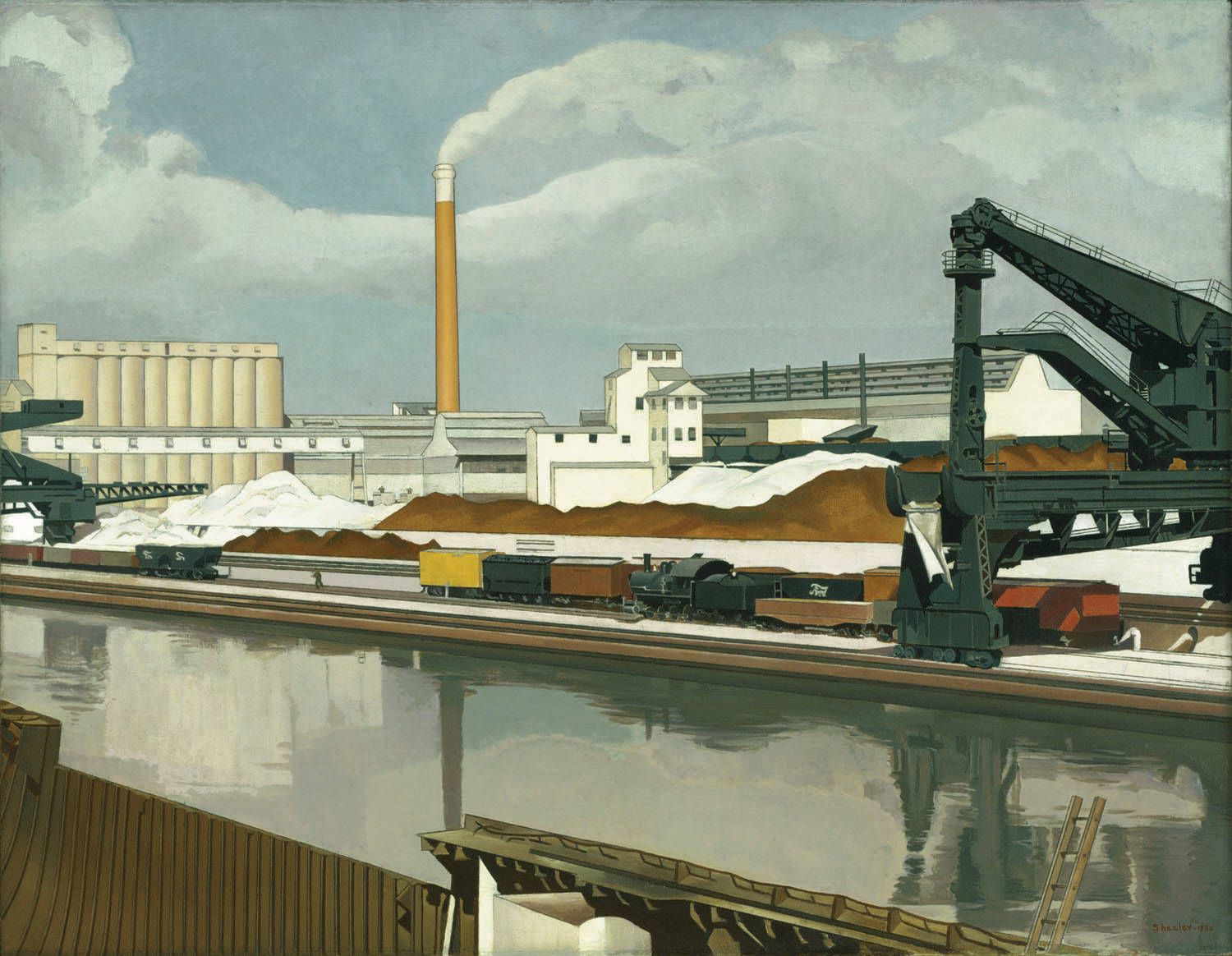
In 1927, the American architectural photographer Charles Sheeler was commissioned to photo the Ford Motor Company's new industrial complex, congenital along the Rouge River in Dearborn, Michigan. Sheeler was not only an achieved photographer, he was as well a keen painter. He travelled to Europe during the outset decade of the 20th century, and was familiar with modernist developments such every bit Cubism. Having photographed the Ford plant, Sheeler returned to the subject area repeatedly, creating a series of paintings from his pictures in mode that combined Cubist motifs with elements we might more than closely associate with Futurism and Photorealism.
Sheeler'due south clear, accurate, straighforward take on the modern world, too apparent in the paintings of agreeing US artists such as Charles Demuth, is now known as Precisionism and is, perhaps the first trully American modern art motility.
"As the 1920s took shape, a group of N American painters responded to the expanding urban and industrial landscape around them with a style that combined the geometric scrutiny of Cubism with the exactness of photography," explains our book Art in Time. "In Europe, the Futurists proclaimed the triumph of technology over nature, just in North America the artists similarly inclined to glorify the industrialised mod world were non formally organised and had no manifesto to bind their beliefs. Precisionism, a term coined in 1927 past Alfred H. Barr, director of the Museum of Modern Art, came to define their precipitous, make clean, imposing aesthetic."
Unlike Futurism, Precisionism was less concerned with overtly praising the beauty and brilliance of modern technology, and was more interested in mimicing its exacting accuracy, even when depicting some of the industry's less lovable aspects.
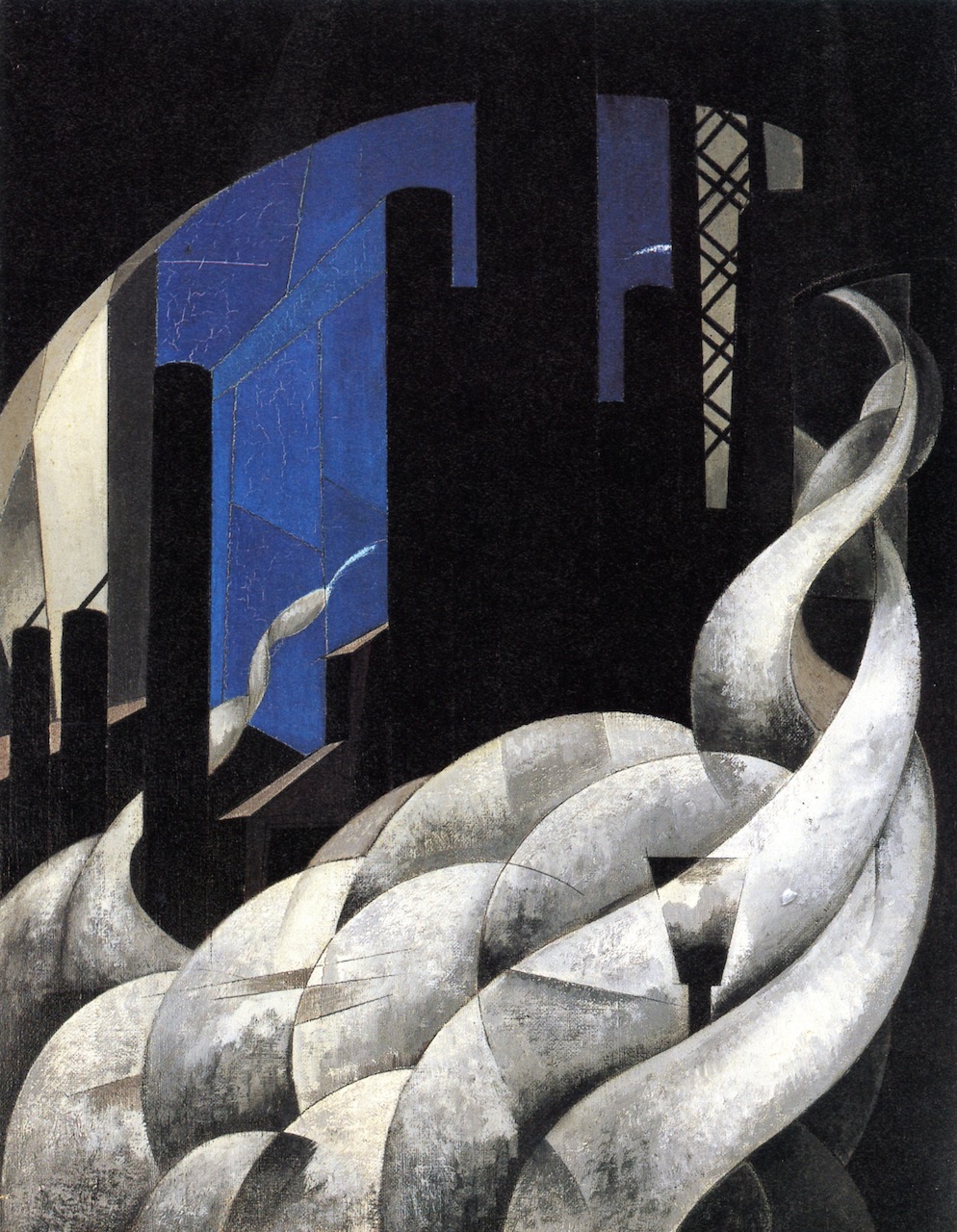
Charles Demuth, Incense of a New Church building, 1921, as reproduced in Fine art in Time
"One creative person to appoint with both American and European strands of modernism was Charles Demuth," Art in Time explains. "In his Incense of a New Church, the Lukens Steel Visitor'south steel yard in Coatesville, Pennsylvania, is transformed into a dramatic, mystical monument. Grey-white fume envelops a skyline of towering chimneys that stand proudly, in rigid refusal of the dusk blue sky behind them. Demuth'south title is ironic – mocking American religiosity past conflating it with the industrial – but whatever intended satire is thwarted past the powerful, ominous dazzler of the manufacturing plant.
"Though American modernists inherited much from Cubism, Incense of a New Church demonstrates the Precisionists' more contained arroyo. Cubism frequently complicated the perception of an object by fragmenting it, whereas Precisionism sought instead to simplify and distill, rendering a reality straight from the assembly line: rigid, unambiguous and – as the movement'south name indicates – precise. For this reason, the Precisionists were sometimes referred to equally the 'Immaculates', and their style was labelled 'Cubist Realism'."
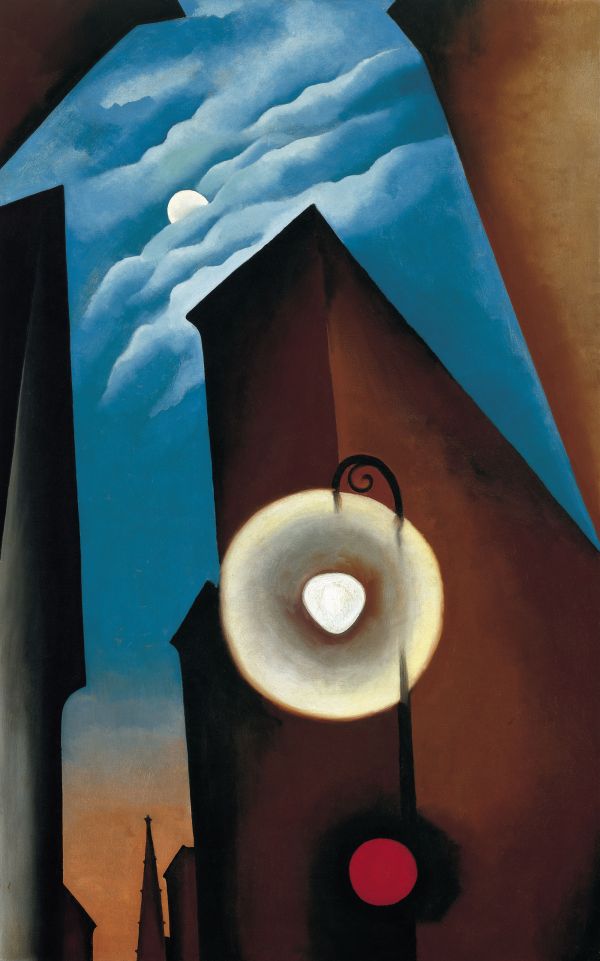
Georgia O'Keeffe, New York with Moon, 1925, as reproduced in Fine art in Time
While Precisionism was not the all-time-known of artistic movements, it did include one earth-famous US painter among its number for a cursory period. "Known predominately for her paintings of abstract flowers, and the desert of the American south-west, Georgia O'Keeffe moved to New York in 1918 and began a series of paintings with the urban center equally subject," explains Art in Time. "She rendered the metropolis in angular, grandiose splendour, every bit in New York with Moon, in which a cluster of buildings create a jagged skyline, crowding the afar moon and framing the brilliant lights of the street below. O'Keeffe's austere, windowless structures propose an impersonal city – as isolating equally it is magnificent."
Today, O'Keeffe's skulls and lilies are more popular than her cityscapes, yet the work of the Precisionists lives on. Demuth is sometimes cited as a pop-art forerunner; Sheeler and other artists' willingness to appoint with photography preempts photorealism; their pivot-sharp rendering of an industrial mural is echoed in the Dusseldorf Schoolhouse; while anyone today who wishes to express the awestruck majesty of the modern America must know that Sheeler and co got there first.
For a deeper understanding of the Precisionists identify in American art get Modern Art in America 1908–68; for more on O'Keeffe get this book; and for more than on this move and many others, go Art in Fourth dimension.
hawthornefuldebou.blogspot.com
Source: https://www.phaidon.com/agenda/art/articles/2017/july/13/a-movement-in-a-moment-precisionism/

Post a Comment for "Precisionism School of Art New York Precisionism School of Art New York Skyscrapers"